


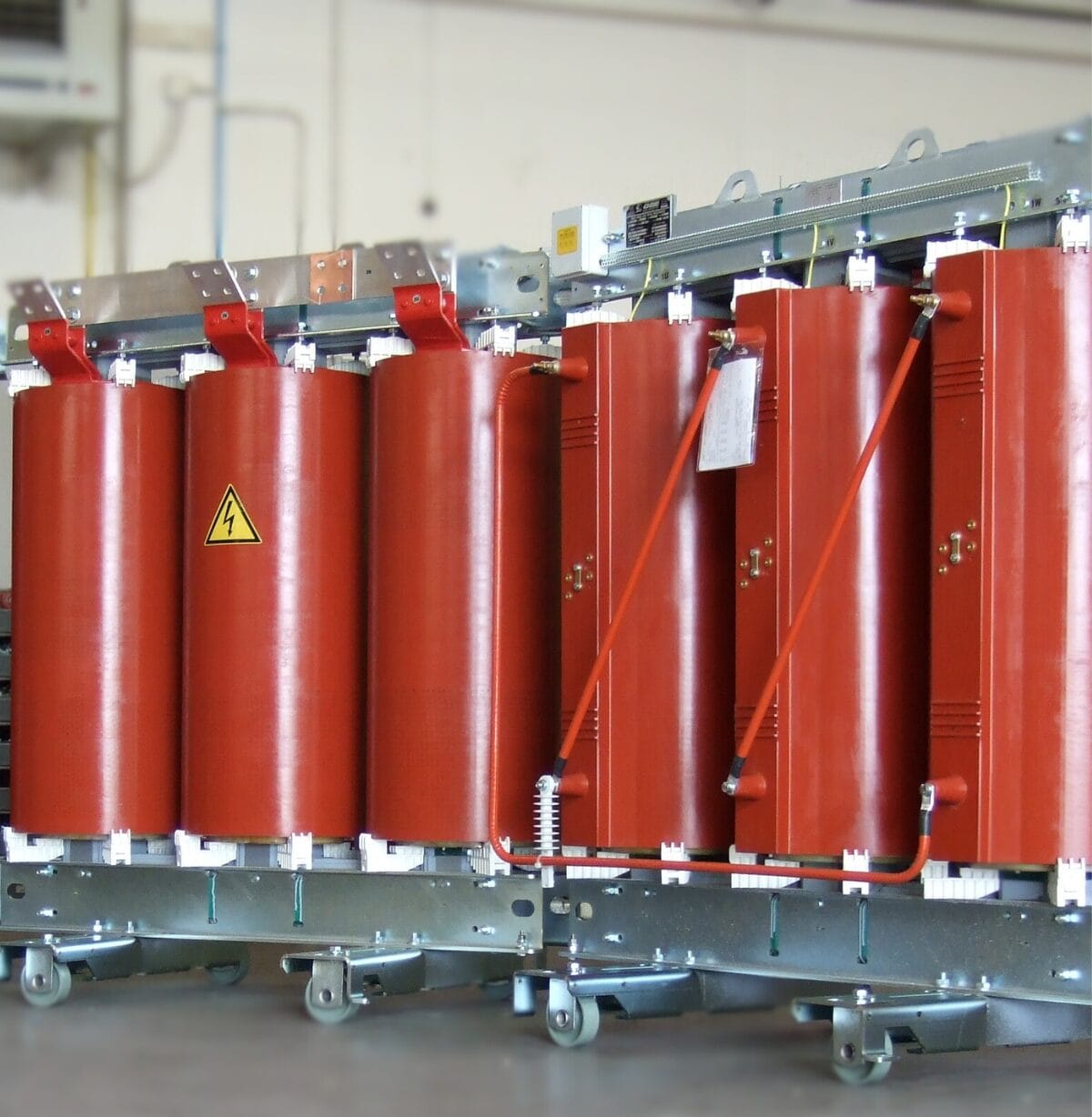
A common question we receive is whether to choose an oil-insulated or cast-resin-insulated transformer. Sometimes people already have an idea of which type is best suited, without having considered all the relevant parameters.
Our message is simple: the right transformer in the right place. Both types have their advantages, and the best choice depends on the conditions of the specific installation. Here, we’ll go over some important factors to consider.
Installation Site
Oil-insulated transformers are generally well-suited for outdoor installations because they do not require any additional weather protection. A cast resin-insulated transformer installed outdoors, on the other hand, requires appropriate weather protection, such as an enclosure with a rating of at least IP23–IP33, depending on the installation conditions.
Dimensions and Space Requirements for Installation
Cast-resin-insulated transformers typically have a smaller total volume than oil-insulated transformers, but are taller. When sizing the space for a cast resin-insulated transformer, the insulation clearances based on the insulation level must also be taken into account. Oil-insulated transformers usually have a larger total volume but are shorter in height. They are most often installed in locked spaces or rooms, although enclosed outlets or touch-safe Elastimold outlets can provide sufficient protection to allow for other installation solutions.
Fire Safety
An important difference between cast-resin-insulated and oil-insulated transformers is the fire risk. Cast-resin-insulated transformers are self-extinguishing and have a low energy content, while oil-insulated transformers have a high energy content. Appropriate fire protection measures must therefore be taken into account.
There are also differences between various types of oil. Mineral oil has a lower flash point and is more flammable, while silicone oil and vegetable oil have higher flash points. However, these alternatives may involve higher costs and other challenges, such as susceptibility to oxidation, which can affect the oil’s insulating properties.
Price
Many people assume that oil-insulated transformers are cheaper, but that is no longer the case. Changes in raw material prices have affected the historical price structure, while more modern designs and more efficient manufacturing processes have helped lower the costs of cast resin-insulated transformers.
It is also important to take into account any optional features and associated costs. For example, fire-resistant oils, such as silicone oil and vegetable oil, entail a higher cost. Similarly, the need for an enclosure for the outdoor installation of a cast-resin-insulated transformer can affect the total cost.
Maintenance
Cast-resin-insulated transformers normally do not require any scheduled maintenance. If a repair is needed, it can be performed on-site by qualified personnel. This means that the transformer can be disassembled and reassembled without having to be transported to an external workshop, which can reduce costs and the risk of prolonged production downtime.
Oil-insulated transformers come in two types. Hermetically sealed transformers require minimal maintenance as long as there are no leaks, while transformers with open oil tanks require regular inspections and maintenance. If service or repair is needed, the transformer must be taken to another location.
Summary
Of course, there are other characteristics and factors to consider when selecting a transformer. The most important thing is to base your decision on the specific conditions of the installation. We’ll help you compare the options and choose the right transformer for the right location.
Comparison of Cast Resin-Insulated and Oil-Insulated Transformers
| Cast Resin | Oil | |
|---|---|---|
| Outdoor installation | Requires at least IP23, but depending on the outdoor environment, up to IP54 may be required. | External protection is not required, except for touch protection. |
| Indoor installation | Suitable, requires only touch protection. | Not suitable, requires an oil containment sump and fire extinguishing system. |
| Safety – touch protection | Requires at least IP20 in indoor installations. | Requires at least IP23 for bushings. |
| Price | Lower purchase price and installation costs. | Higher purchase price and installation costs. |
| Insulation class | Max. 52 kV. | No limitations. |
| Fire load | Low due to low energy content. Cast resin transformers are also self-extinguishing. | High due to combustible mineral oil. Silicone oil or vegetable oil can be used to reduce the fire load. |
| Short-circuit withstand strength | Very good. | Good. |
| Ability to withstand voltage resonance and switching transients | Good. | Very good. |
| Ability to withstand vibrations | Very good, can be used on vessels and in seismic zones with only minor reinforcements. | Good, but not suitable for vessels or seismic zones. |
| Maintenance | Limited, requires only visual inspection and possible dust removal, depending on the environment. | Some maintenance is necessary. Open design with an expansion tank requires regular maintenance. |
| Environmental properties | No emissions to the surrounding environment. | Risk of leakage may occur. An oil containment sump must be available. |
| Transport and handling | Robust design, but must be handled with care. | Good, but extra care must be taken to avoid leakage. |
 Verified by Thomas Carlsson.
Technical Sales Representative at Unitrafo since 1998.